 Here now
Now here
No-where
No-body
No-thing
Dark-light
Empty
Groundless
No past
No future
Being here now,
Being no-where.
I am
Only in I AM.
© J. Patrick Mahon, 2014

Here now
Now here
No-where
No-body
No-thing
Dark-light
Empty
Groundless
No past
No future
Being here now,
Being no-where.
I am
Only in I AM.
© J. Patrick Mahon, 2014

Great Egret
Today’s reading from Thessalonians reads, “Rejoice always.” In Philippians, Paul expanded this and wrote, “Rejoice in the Lord always, again I say, rejoice. Indeed, the Lord is near.”
He exhorts us to rejoice always. We say, “Always?” Are we to rejoice when all is going wrong? Paul would answer, “Yes, always.” Paul is not speaking of happiness which is a “mental or emotional state of well-being characterized by positive or pleasant emotions ranging from contentment to intense joy.” Happiness would have us rejoice only when things were positive. Paul is speaking about joy. The dictionary definition again stresses the positive. The scriptural definition of joy goes much deeper. Continue reading

Grey Bloc Belgrade
On our Danube cruise last summer, we were in five former Soviet Bloc countries as we went from Budapest to Bucharest. Years after the end of Soviet domination, signs of drab life under Communism still remain. In the cities there are block after block of dull grey bloc apartment buildings where workers were forced to live an equally drab existence. Retried Episcopal bishop John Shelby Spong recently reflected on his visit to former Soviet bloc countries and said Communism fell apart because Communism misunderstood human nature. From “each according to ability and to each according to need” is a prescription for failure. Our basic instinct is for survival, not for the common good. People came out from under Communism just as the Israelites escaped the drab slavery of Pharaoh’s Egypt. They set forth with a dream of a just society where everyone mattered. Time and time again, they would go astray but prophets, like Isaiah, called them back to the noble vision. Continue reading
 In 1925, Pope Pius XI established the Feast of Christ the King. His intent was to emphasize that secularism does not hold the answer for Christians. Ultimately our allegiance is to the Risen Christ and not to worldly things. In today’s consumer world, we need to examine what drives our lives. Some pundits say it is the economy that has replaced religion, “The economy is my shepherd, I shall not want. My IRA leads me to restful waters.”
Jesus was a Jew, not a Christian. He followed in the footsteps of the revolution begun by Moses. Moses led the Hebrew people out of Egypt where Pharaoh oppressed them. The Exodus story is not about locust plagues and parted seas. Moses and the Israelites were setting about the task of creating a system where justice prevailed. Continue reading

Photo by Leandro Taub
God is my shelter,
My refuge in troubled times.
I can count on God.
God delivers me
From the trapper’s snare
And deadly diseases.
God covers me with pinions
And under God’s wings I find
Shelter from all terrors.
Terrors of the night
And the threats of terrorists
Do not make me fear.
From all evil threats-
Ebola, ISIL, and all-
God is my shelter.
Sickness, famine, war
Will not cause me any harm.
God is my refuge.
God walks at my side
And my foot will not stumble
And I will not fall.
Homeland Security
Is not the place for our trust.
God alone will deliver us.
Call upon our God
Who will rescue and save us,
Our protector always.
Christ Pantokrator*
All powerful and mighty
God is our protector.
*Lord of Hosts, God Almighty (Orthodox icon)
c. J. Patrick Mahon, 2014
Lord of the Sabbath
Lord of the Sabbath,
Jesus the Christ has now come
To give us freedom.
Freed from the old law,
We participate in new life,
God’s adopted children.
It is not the law.
It is all about people
And their human needs.
Christ became human
So that we might become God,
Made in God’s image.
God is related love
Going way beyond God’s self
For the other’s sake.
Spirit led are we
To transcend survival instincts
For the good of all.
God is e’r faithful
That we too may be faithful,
Disciples of love.
Feeding the hungry
We give food to Christ himself,
God love incarnate.
Housing the homeless
We give Christ a new manger,
A loving shelter.
Caring for the sick
We bind up the wounds of Christ,
Healing balm anoints.
Freeing the imprisoned
We set free the fire of love
To bring new freedom.
Swords mage plough shares.
We bring God’s shalom to all.
Peace trumps violence.
God comes to us
Disguised as life’s encounters,
Incarnation made real.
The Christ comes to us
In the poor’s distressed disguise-
Their god life shines.
Love one another.
Be faithful to the Good News,
God dwells among us.
Lord of the Sabbath,
Lord of the Dance bring us joy.
Teach us to dance life.
© J. Patrick Mahon, 2014
Revelation 12
Heavenly temple
Filled with the ark of the Word
A symbol of hope.
The woman appeared
Clothed in stars, the sun and moon
Wailing to give birth.
The woman represents
All God’s people—old and new
Seeking life’s fullness.
Eternal feminine
Life giving nurturing love
Prevails forever.
Church of the Christ
Assaulted by the empire
Trying to destroy life.
Dragon Leviathan
Hurling down the stars above
Thrashing all about.
Technique* driving on
Destroying life in abundance-
Alienation abounds.
The woman gives birth
God takes up the child; the Christ
Will overcome the beast.
Safe in a desert
The woman enjoys refuge
Awaiting the new age.
From desert places
Comes rich life in abundance—
God-Love abounding.
The desert of silence
Will overcome the deathly din
Of evil’s empires.
Empire will not rule.
God’s kin-dom overcomes evil
And all will be well.
Indeed all is well
And all will ever be well
In God’s Love Kin-dom.
Sing praise to the Christ
Who leads us on shalom** paths-
With life in abundance.
*Jacques Ellul, French philosopher, describes the fact that in our technological society, technique orders our lives. Technique relies on reason to find the most efficient solutions to problems and challenges. Technique excludes morality and God from life choices. As such it is a false god, an idol.
**Health, wholeness, well being.

Matthias Church Sanctuary, Budapest
Thomas Merton and Jacques Ellul, French philosopher, shared common views about technology and its potential to sap us of our true selves. While technology enhances many human endeavors, technique, Ellul’s term, points to the dangers in a world that focuses totally on reason and the best, most efficient technological solutions to problems. In Psalm 16, the psalmist reminds us that God alone is our allotted portion and cup, our sanctuary. In God alone will we find our true selves, the image of God dwelling deep within us yearning and moaning to come to full exposure in our lives.
This is a psalm about the temple as sanctuary. The temple is a symbol of God’s presence to us and in us.
Psalm 16
You are my refuge.
I place all my trust in you.
You alone are God.
Others chase idols—
Power, pride, and possessions.
Technique* rules their lives.
Their choices add to
Their sorrows, woes, and troubles.
Their lives are in vain.
But you are my God—
My allotted portion and my cup.
I find peace in you.
I lead a good life.
You fill me up with grace.
And blessings abound.
Even in the night
When darkness encompasses,
You give me counsel.
You are with me now
You save me from deep despair
You promise me life.
In you I rejoice
I am filled with shalom hope
I glorify your name.
*Jacques Ellul, French philosopher, describes the fact that in our technological society, technique orders our lives. Technique relies on reason to find the most efficient solutions to problems and challenges. Technique excludes morality and God from life choices. As such it is a false god, an idol. In the thought of Herbert Marcuse, German philosopher, technique makes us one-dimensional people with no real choices in life.
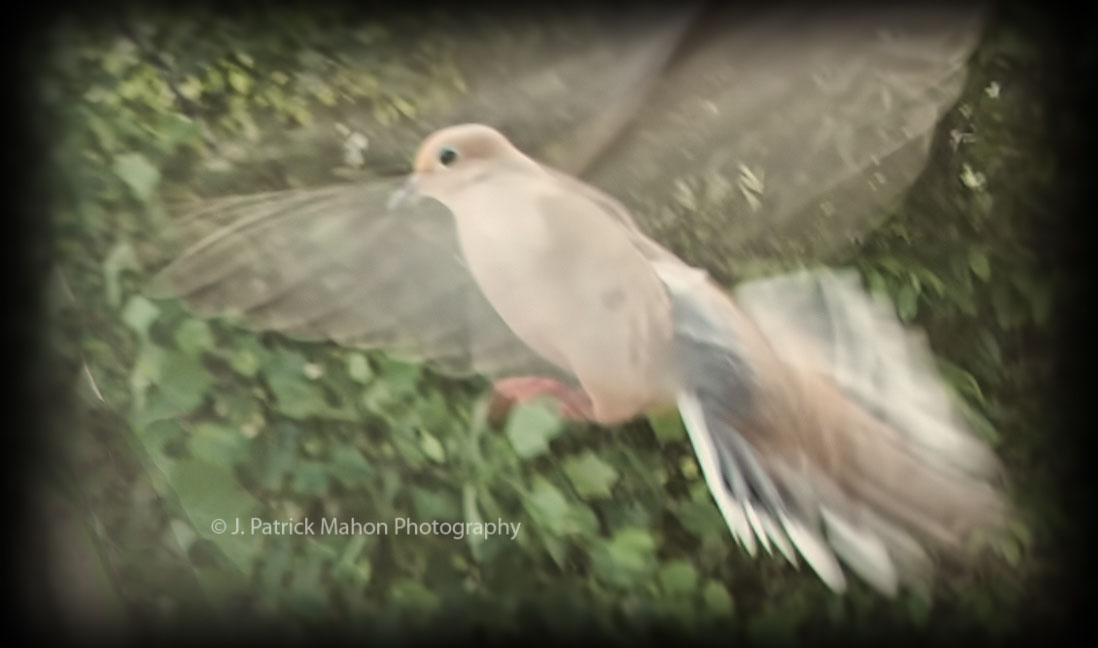
Mourning Dove of Peace
Psalm 46
God is our refuge,
Our strength in times of crisis,
Taming all chaos.
Earthquakes may rumble,
Hurricane waters may roar
But our God calms them.
God’s healing waters
Surround us and give us life
Life in abundance. Continue reading
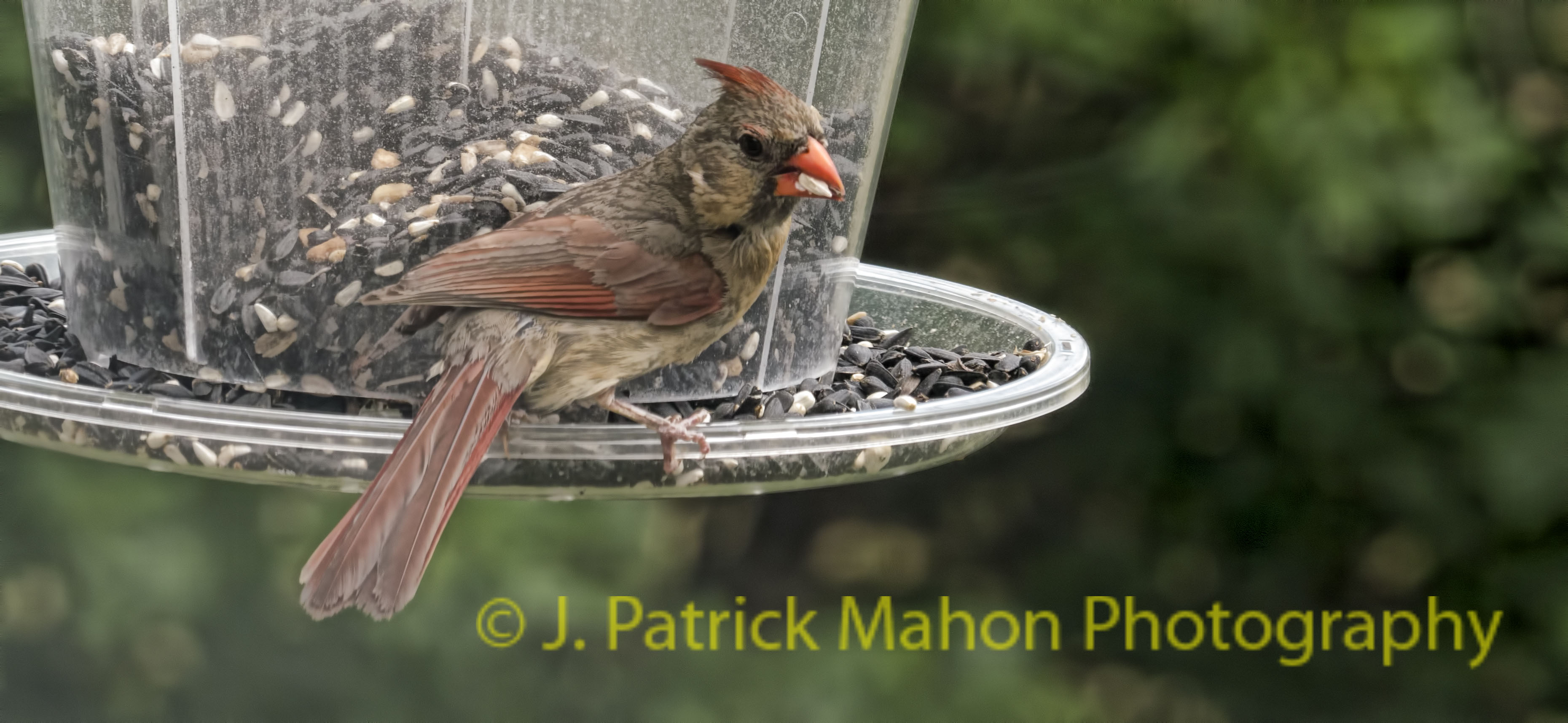
Cardinal on my feeder
Psalm 149
Sing hallelujah!
Ever giving praise to God
Who is faithful.
Strum on your guitars,
Play the chords on your keyboards,
Blast away on trumpets.
Our God cares for us-
Exalting all the humble
Lifting up the meek.
If we have any victory
Over those who dare oppress us,
It is from our God.
Eschew violence
Always placing trust in God
Who delivers us.
Place your trust in God.
We are powerless over foes.
Only God can save us.
We should always sing
Our praises to God in churches,
In the assembly of faith.
Ever faithful and true
God will lead us to green fields
Giving us banquets.
Bubbling flowing streams
Will bring us God’s peace and love.
Then we shall overcome.
Give glory to God
Give thanks for loving kindness,
Sing halleluia!
© J. Patrick Mahon, 2014